1. A sheep, a duck, and a rooster on board
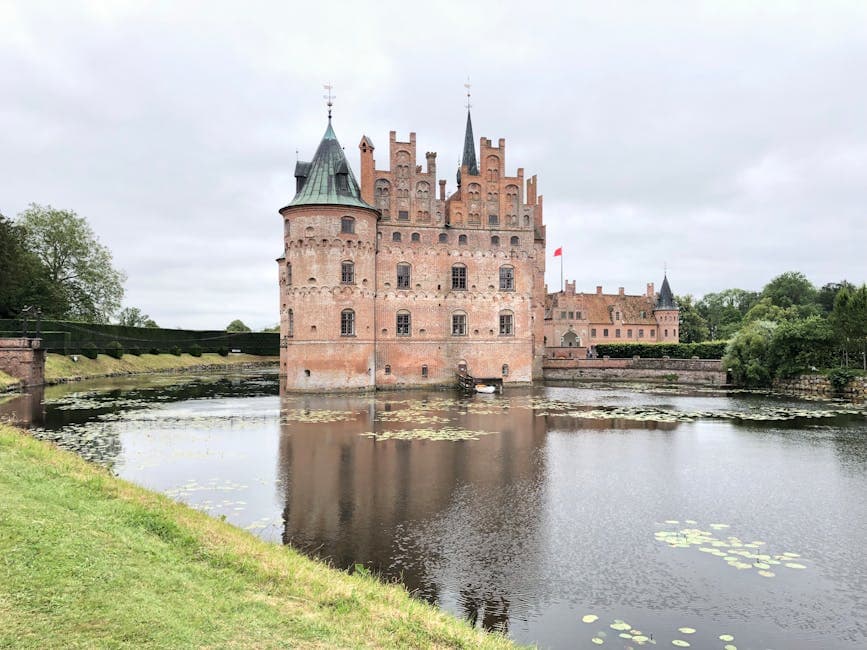
The hot air balloon was invented in France in 1783 by brothers Joseph and Étienne Montgolfier. The brothers arranged a demonstration for Louis XVI and the royal family in the palace courtyard. The passengers on the first test flight were a sheep, a duck, and a rooster.
The balloon rose to about 600 m, but the trip was not long. Due to a tear in the balloon casing, the balloon landed shortly after in the Vaucresson forest. Fortunately, the animals were unharmed, and they were then hailed as heroes and lived on the castle grounds for the rest of their lives.

2. Military balloons
Hot air balloons were previously used for military purposes such as reconnaissance and observation.
There are many examples of the use of hot air balloons, especially since World War I, where military balloons were used on both sides of the war. With their help, one could observe the enemy’s movements while being out of range.
Many might ask how safe it was for the pilots to fly the hot air balloons, considering that the balloons and their coverings could not measure up to the more traditional military aircraft, and that is a good question.
Balloons were actually attacked and set on fire, so when it became too dangerous and the balloons could no longer be used for their purpose, the pilots left them using parachutes.
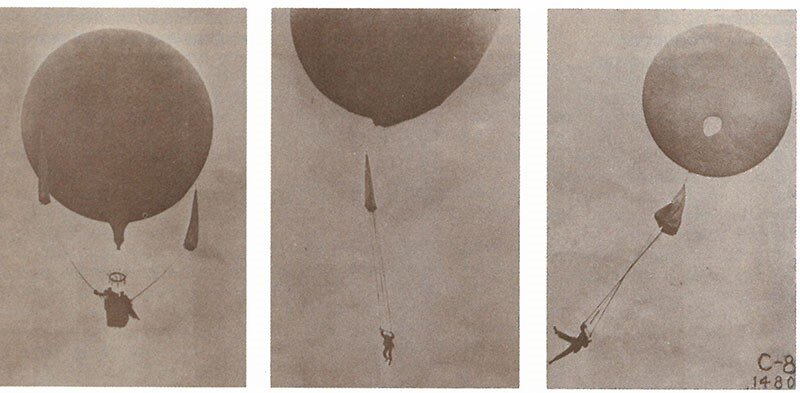
Photo: A reconnaissance balloon is evacuated via parachute
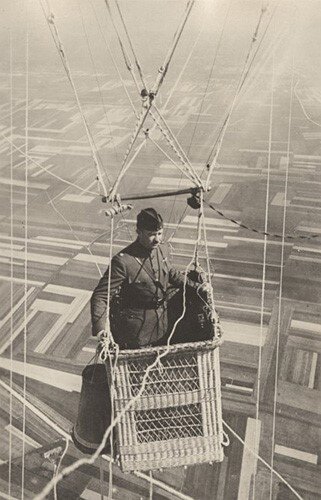
Photo: An American major in the basket of a reconnaissance balloon en route over an area near the front line in France.
3. Danish balloon military history – The Balloon Hangar
The 100-year-old balloon hangar on Islands Brygge in Copenhagen is one of the only remaining of its kind in Europe. It is now a listed building, which bears witness to a very special era in Danish military history.
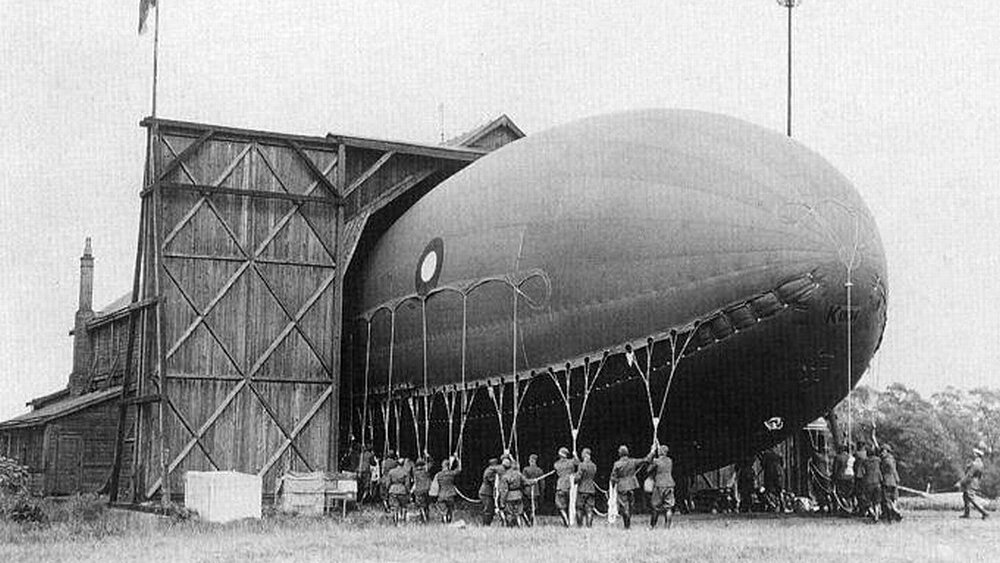
The balloon hangar, which is worth a visit, was built in 1917. The mastermind behind the practical and functional wooden building was not an architect, but a Captain Gottschalk from something as exciting as the Army Ballooning Service.
The purpose of the balloon hangar was to store the observation balloons that were used during the artillery’s precision shooting exercises. From a basket under the tethered balloon, the soldiers could see if the artillery hit the spot.
Storing a balloon of these gigantic dimensions, moreover filled to bursting point with the extremely flammable hydrogen, naturally required a special building – first and foremost a building without internal load-bearing structures, which could block the balloon, but also a building with a gate opening high and wide enough for the large balloons to enter and exit.
DreamBalloons’ current hangar is located in Karlslunde. It is also large and spacious with a high gate, but it is no longer to accommodate filled gas balloons, but so that our many trailers with baskets can come in and out. Our hot air balloons are deflated when stored between flights.
4. The world’s largest balloon festival
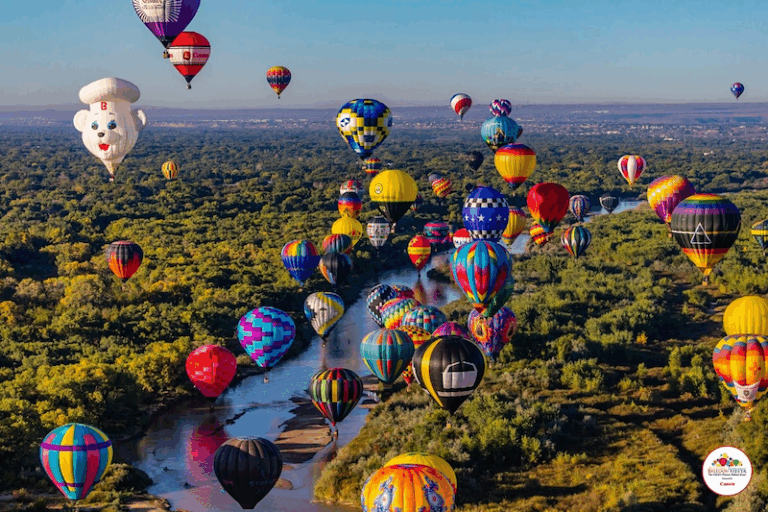
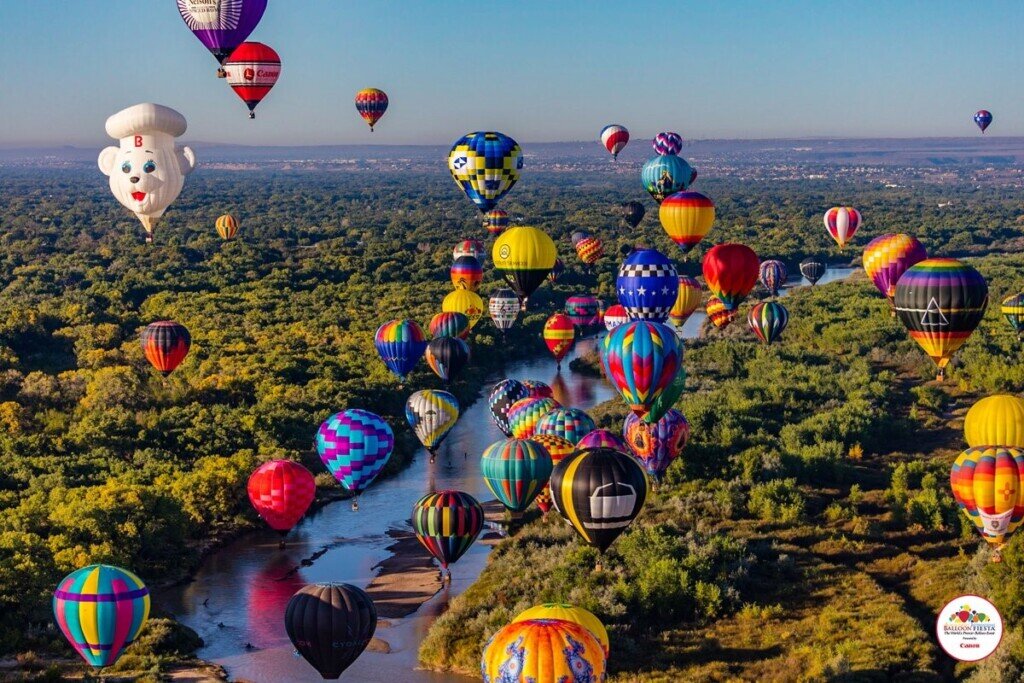
The Albuquerque International Balloon Fiesta is the world’s largest balloon festival. It has taken place in Albuquerque, New Mexico, USA since 1972.
In 1972, only 13 balloons participated in the festival. Today, over 500 balloons participate in the festival every year.
We’ll repeat that for all of you in the back: 500 balloons!
5. Competition for homemade balloons
In 2010, two American adventurers and friends, Kent Couch and John Freis, organized a very special balloon competition, which was about who could fly the furthest. The special thing about the flight was that the two did not fly in ordinary balloons but in chairs, to which they had attached a lot of small helium-filled balloons.
In this experiment, both rose to a height of more than 17,000 feet (over 5 km!), so they had to use oxygen masks. John won the competition, landing after 73 miles (almost 116 km), while Kent landed 3 miles before.


There’s more! In our next blog section, you’ll find even more interesting facts about balloons the size of a bus and about balloons that fly upside down 🙂
Sources for further studies for the curious: